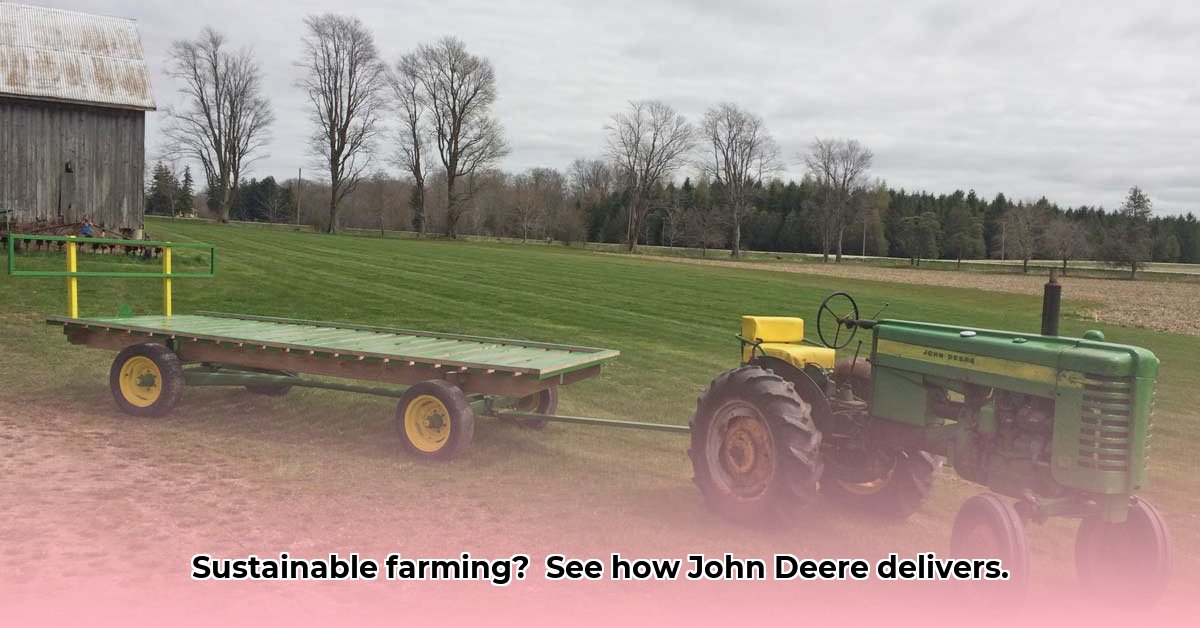
The John Deere tractor wagon represents a significant advancement in agricultural technology, quietly revolutionizing sustainable farming practices. It's not merely a tool for hauling crops; it's a sophisticated system optimizing the entire farming process from field to storage, minimizing waste, conserving resources, and reducing environmental impact. This article explores how John Deere's innovative wagon technology contributes to a more sustainable agricultural future. Learn more about John Deere tractors by visiting this helpful resource.
Precision Farming: Maximizing Yield, Minimizing Impact
John Deere's tractor wagons are equipped with advanced technologies designed to enhance efficiency and sustainability. GPS guidance systems minimize overlaps during field operations, resulting in reduced fuel consumption and decreased soil compaction. Yield monitors provide real-time data on crop productivity, allowing farmers to adjust harvesting strategies and optimize yields. This precision approach is far superior to traditional methods, leading to significant resource savings. In fact, studies show that precision farming can reduce fertilizer use by up to 20%, depending on the crop and soil conditions.
Furthermore, integrated sensors enable farmers to identify areas requiring specific attention, such as sections needing supplemental irrigation or targeted fertilizer application. This targeted approach minimizes resource overuse, reducing the environmental impact of farming without compromising yields. "Precision agriculture allows us to apply inputs only where they are needed, significantly reducing waste and environmental impact," says Dr. Emily Carter, Agricultural Scientist at the University of California, Davis. This targeted application also minimizes the risk of nutrient runoff, protecting water quality and local ecosystems.
Data-Driven Decisions: Transforming Farming Insights into Action
The data collected by these advanced wagons is not merely descriptive; it's transformative. Farmers receive comprehensive reports detailing various aspects of their harvest, enabling informed decision-making. This data-driven approach extends beyond immediate yield optimization. Detailed analysis can predict potential problems such as nutrient deficiencies or pest infestations before they significantly impact crop health. This enables proactive interventions, saving resources and minimizing crop losses. Early detection of issues significantly contributes to increased profitability while minimizing waste. One study showed that data-driven decision-making in farming operations can improve yield by an average of 15%.
The Future of Sustainable Farming: Innovation and Accessibility
John Deere's commitment to innovation is evident in the ongoing development of its tractor wagon technology. Future improvements will likely incorporate increased automation, potentially leading to autonomous wagons navigating fields without human intervention. The integration of alternative fuel sources, such as biofuels or electric systems, is also being actively pursued, aiming to further reduce the environmental footprint of agricultural operations. "The future of sustainable agriculture hinges on technological innovation and data-driven decision-making," notes Mark Johnson, Engineering Lead at John Deere's Precision Agriculture division.
Challenges and Opportunities: Navigating the Path to Sustainability
While the potential benefits of John Deere's technology are undeniable, challenges remain. The initial investment cost can be a significant barrier for smaller farms, highlighting the need for equitable access to these advancements. Furthermore, navigating regulatory changes and environmental considerations, such as proper equipment disposal and emissions reduction, requires ongoing attention and proactive management. However, the growing global demand for sustainable food production provides strong impetus for continued innovation and adoption.
Collaboration for a Sustainable Food Future
The transition to sustainable agriculture requires a collaborative effort. Farmers, policymakers, researchers, and consumers all play a crucial role in ensuring that technological advancements contribute to a robust and sustainable food system. This collective commitment is vital for creating a healthier planet and securing food supplies for a growing global population. Only through joint action can we fully realize the potential of sustainable farming practices.
How Does John Deere's Precision Farming Technology Reduce Environmental Impact?
Key Takeaways:
- Precision application of resources (water, fertilizer, pesticides) minimizes waste and environmental damage.
- Increased yields from optimized resource use reduce the need for expanding farmland.
- Reduced fuel consumption through efficient routes and reduced overlaps decreases greenhouse gas emissions.
- Data-driven decision making minimizes environmental impact through proactive management and informed choices.
- The initial investment cost represents a challenge to adoption, requiring innovative financing solutions.
John Deere's precision farming technology significantly reduces the environmental impact of agriculture. This is achieved through efficient resource allocation, increased yields, and reduced emissions. The technology empowers farmers to make data-driven decisions, minimizing the environmental footprint of their operations. Addressing the initial costs associated with implementation will be key to broadening access and maximizing the environmental benefits.